
Sandtray has many uses
Our work with adolescents and teens often involves learning how to successfully regulate our emotions. And the first step to learning how to regulate emotions is to first increase our awareness of our particular emotional states and how we move between them. I often use sandtray with clients to help build and organize this awareness and, in so doing, we end up with an effective tool that helps them regulate their emotions.

Window of Tolerance
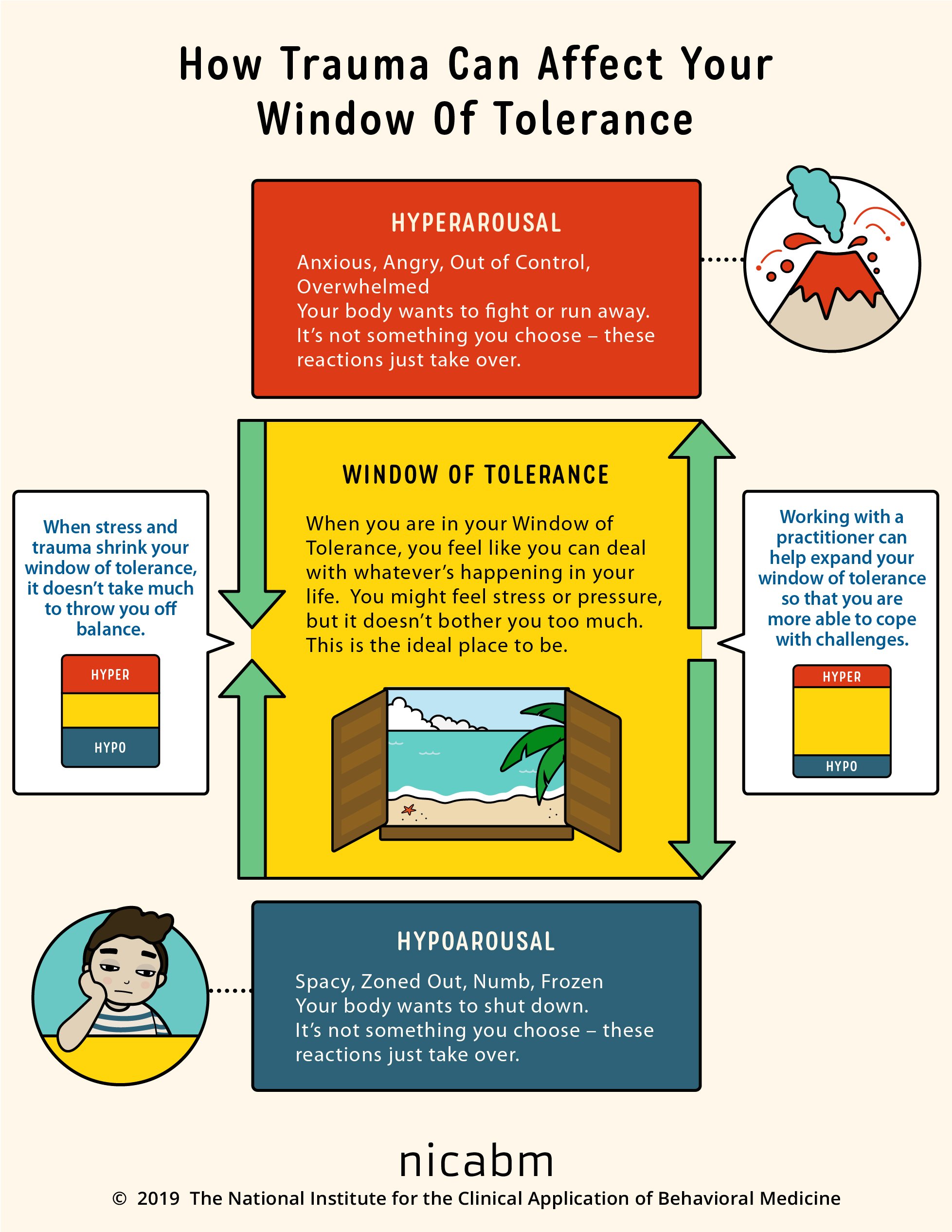
We start by creating a representation of the “window of tolerance” in the sandtray, dividing the sandtray into three sections to represent the three main states of arousal: optimal arousal, hyperarousal, and hypoarousal. With younger children I often refer to these as our green zone, red zone, and blue zone respectively. We are in our window of tolerance when we are in a state of optimal arousal, meaning that:
- We are in a balanced and calm state of mind
- We feel relaxed and in control
- We are able to function most effectively
- We are able to take on any challenge life throws at us
Stress and trauma naturally shrink our window of tolerance while other activities like listening to music, deep breathing, meditation, and exercise can expand our window of tolerance. In the sandtray we find ways to symbolize the stressors that shrink our window as well as the supports and resources that help us stay in our window and expand it (click to see a visual about trauma and the window of tolerance)
Dysregulation
When we dysregulate we leave our window of tolerance and go into either hyperarousal (an abnormal state of increased reactivity where we can feel anxious, angry, and/or out of control) or hypoarousal (an abnormal state of decreased responsiveness where we can feel emotionally numb, exhausted, and depressed). I often use animal figures in the sandtray to represent these different states because clients tend to connect with them intuitively. Clients then place their own figures in the sandtray to represent their own particular experiences in each state of arousal.
I have found that using sandtray in this way is particularly effective in helping adolescents and teens to understand and organize their emotional experiences. In this way a client’s sandtray becomes a tool they can use to more easily identify their early signs of emotional dysregulation and what they can do to intervene and regulate themselves, thereby expanding their window of tolerance.
